
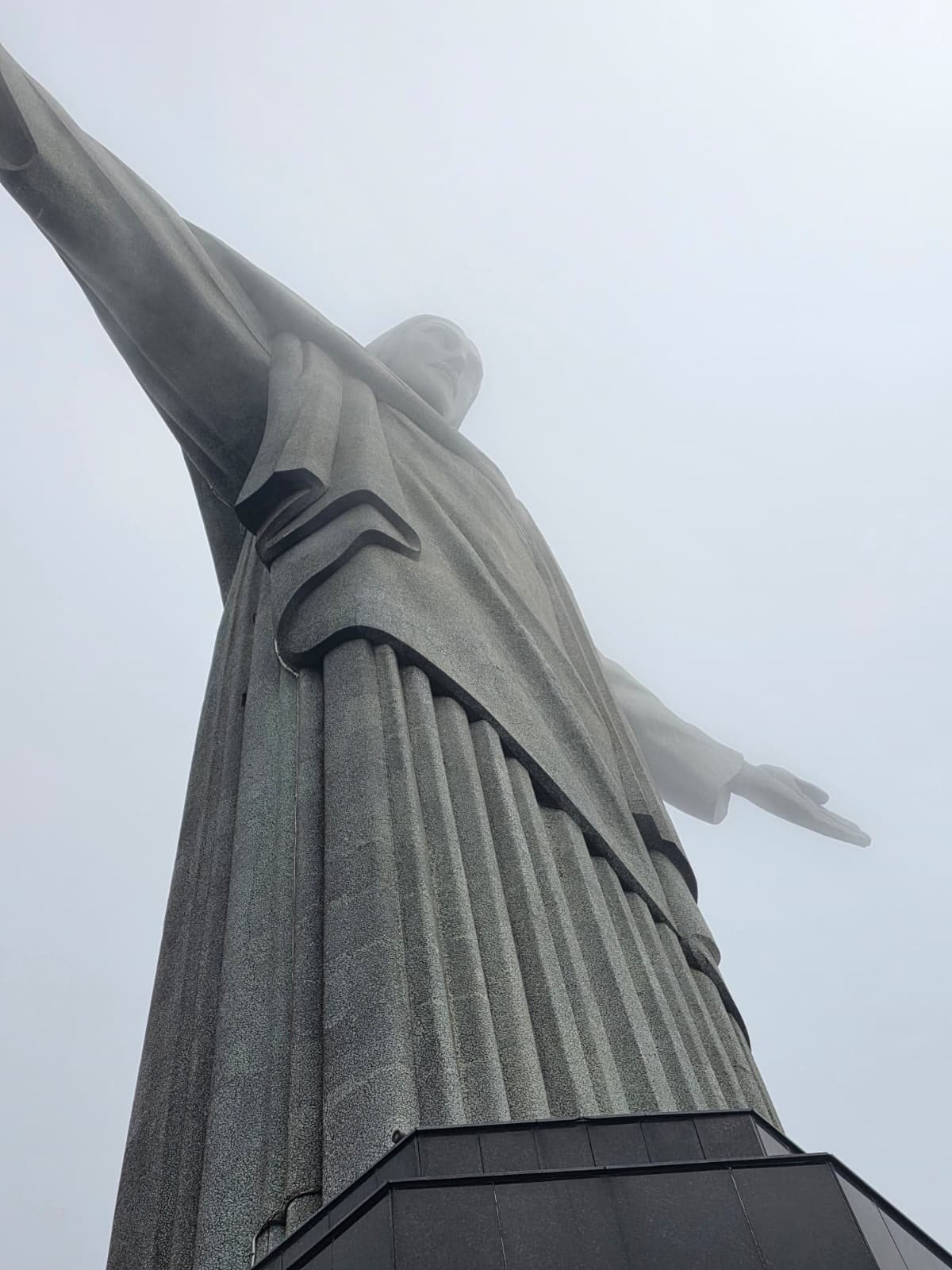
You come up the last stairs at Corcovado with your neck already bent back. That is what the mountain is for. Seven hundred metres of train and van and escalator, and then the platform, and then him, thirty metres of soapstone with his arms out over the bay, and the whole crowd tilts its head at once like a field turning to the sun.
When I arrived he was in cloud. The robe was sharp and granite grey to the shoulders and then the head simply went, and the arms reached out of the weather into nothing. The crowd stood under him anyway and photographed the half of him there was, and waited, the way you wait at the top of a mountain for the view you paid for.
Then the sun came out. It took a minute, and it was worth the whole climb. The cloud pulled off the summit, the face came back, and there he was against blue sky from sandal to crown, arms out over the bay, the whole statue clear for the first time all morning.
That lasted about as long as a photograph.
I had found a place at the rail and decided to pray. Nothing long. I had the first words ready when something whistled.
I heard it before I saw it. Capuchins whistle, a thin high note like a kettle a long way off, and it is not a sound anyone expects at a statue. When I turned, one was sitting on the rail at eye level, the size of a small cat, dark as wet bark with a gold cast where the sun caught it, a black cap on its head, and a tail hanging over the drop like a bell rope. It had its hands folded in its lap. It looked at me with the complete confidence of an animal that had done this before. The prayer went wherever prayers go when they are not finished.
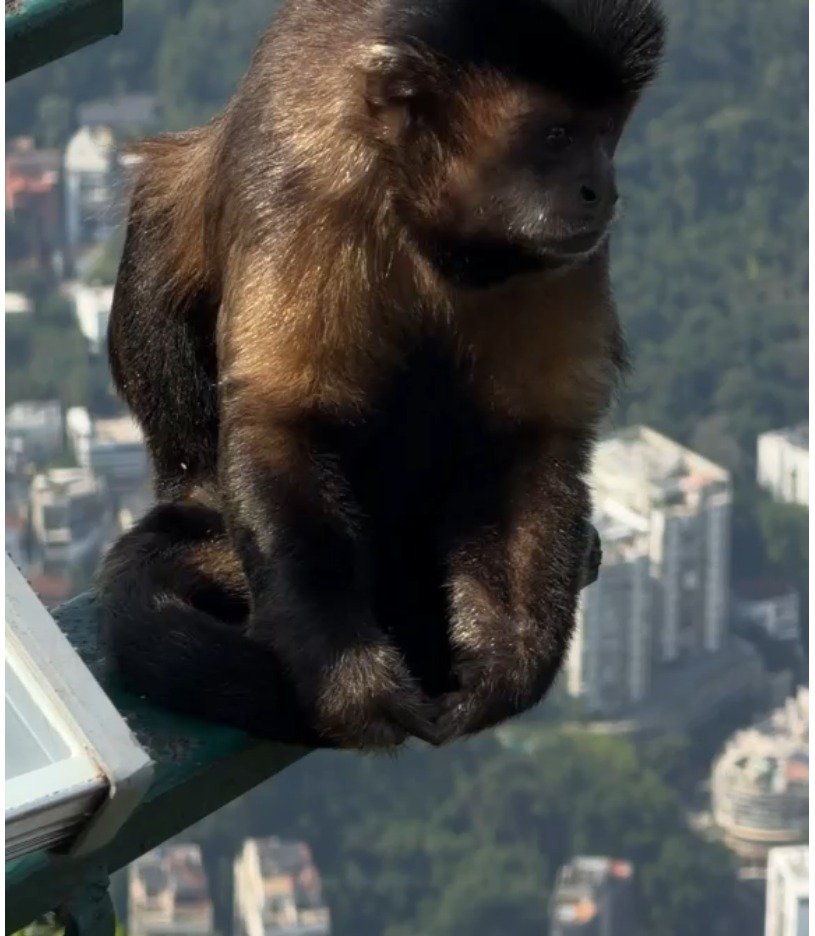
Then there were two of them.
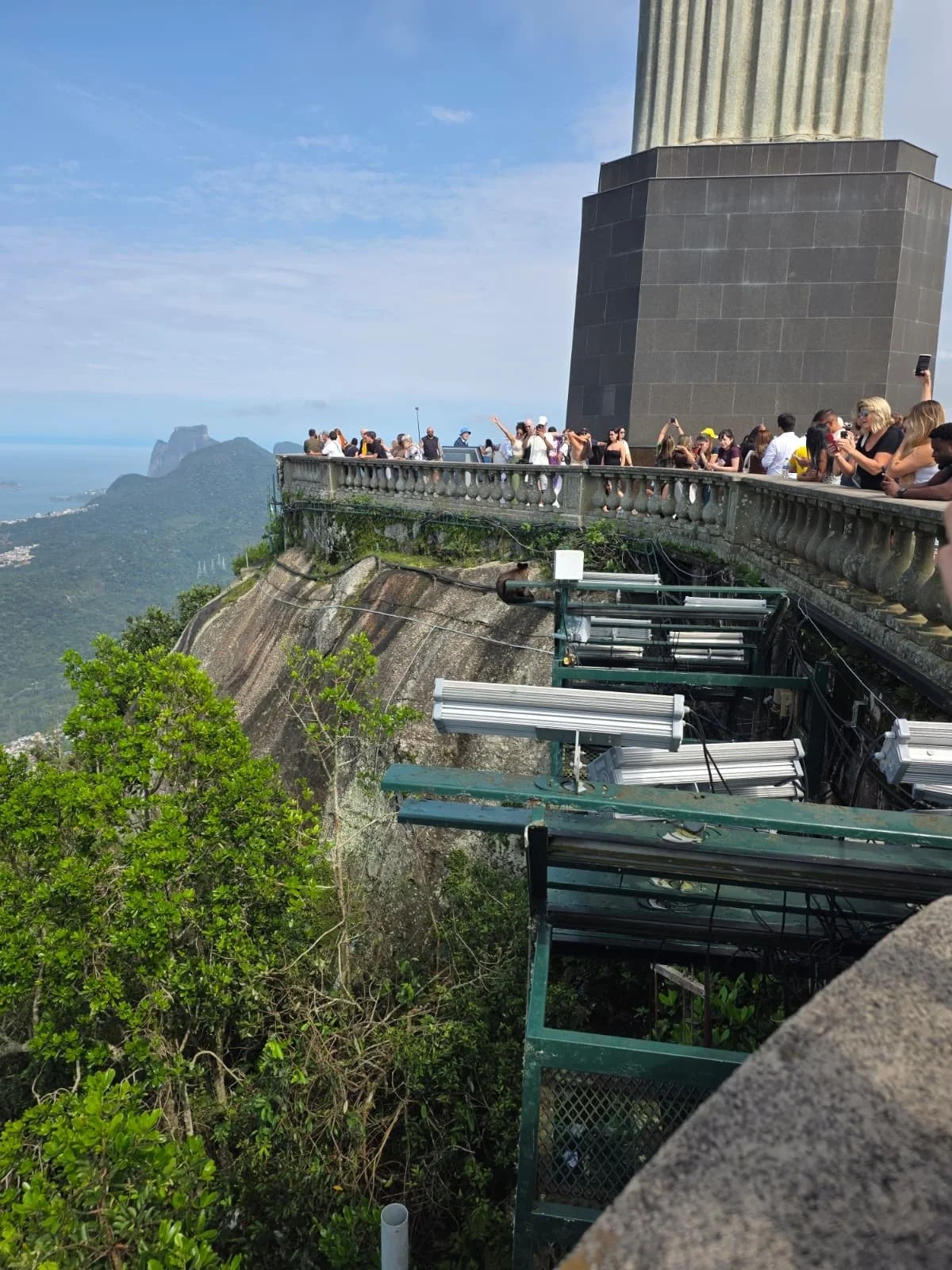
It happened without anyone deciding it. Nobody said, let us stop looking at Christ. Nobody looked at him and turned away. They simply turned and leaned over the balustrade, and within a minute, most of the people who had queued an hour and paid for the train and climbed the mountain to stand under the risen Christ were playing with monkeys. That is the only honest way to say it. Not photographing, not observing. Playing, the way children play, crouched and laughing and reaching, with the arms of the Redeemer spread over the city above a wall of backs. Not everyone. A few kept their faces up, and I noticed them because there were so few.
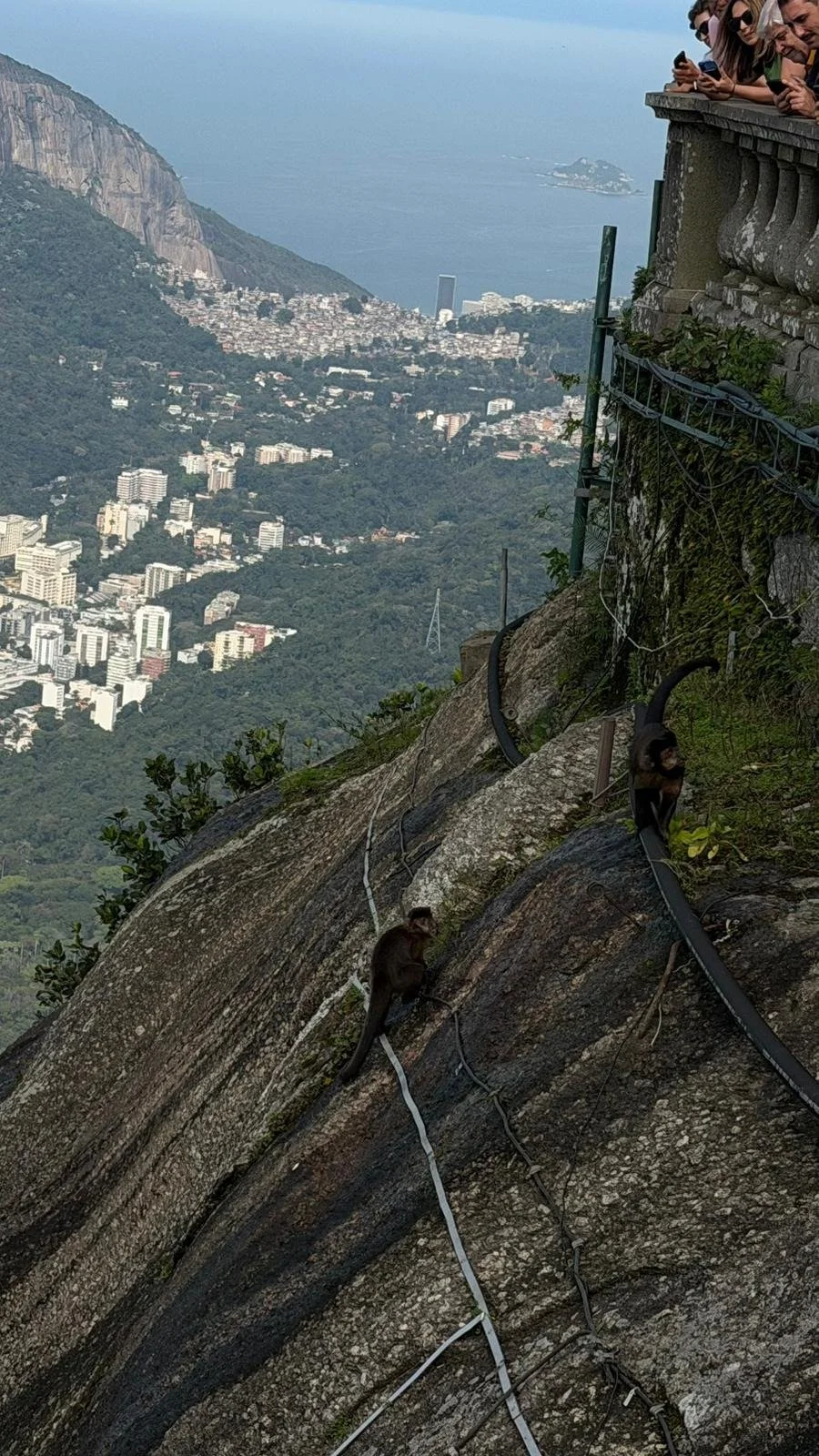
One of the monkeys was a thief, working the rail like a pickpocket. He flitted from guest to guest, taking food straight out of hands, and when there was no food it played with the hands themselves, turning fingers over, tugging at a ring, looking up to check that it still had you. It did. It was tricky and quick and clever and, I have to say it, enormous fun.
I photographed the monkeys. Of course I did. I have a dozen pictures of them, dark brown and in perfect focus, on the rail, on the rock, on the lighting rigs, one with a piece of fruit in both hands and Ipanema behind it. I have two pictures of him, both from before, with his face going into the cloud.
I have none of him in the sun.
The minute he was fully there, after all that waiting, most of us were looking the other way, and I was one of them.
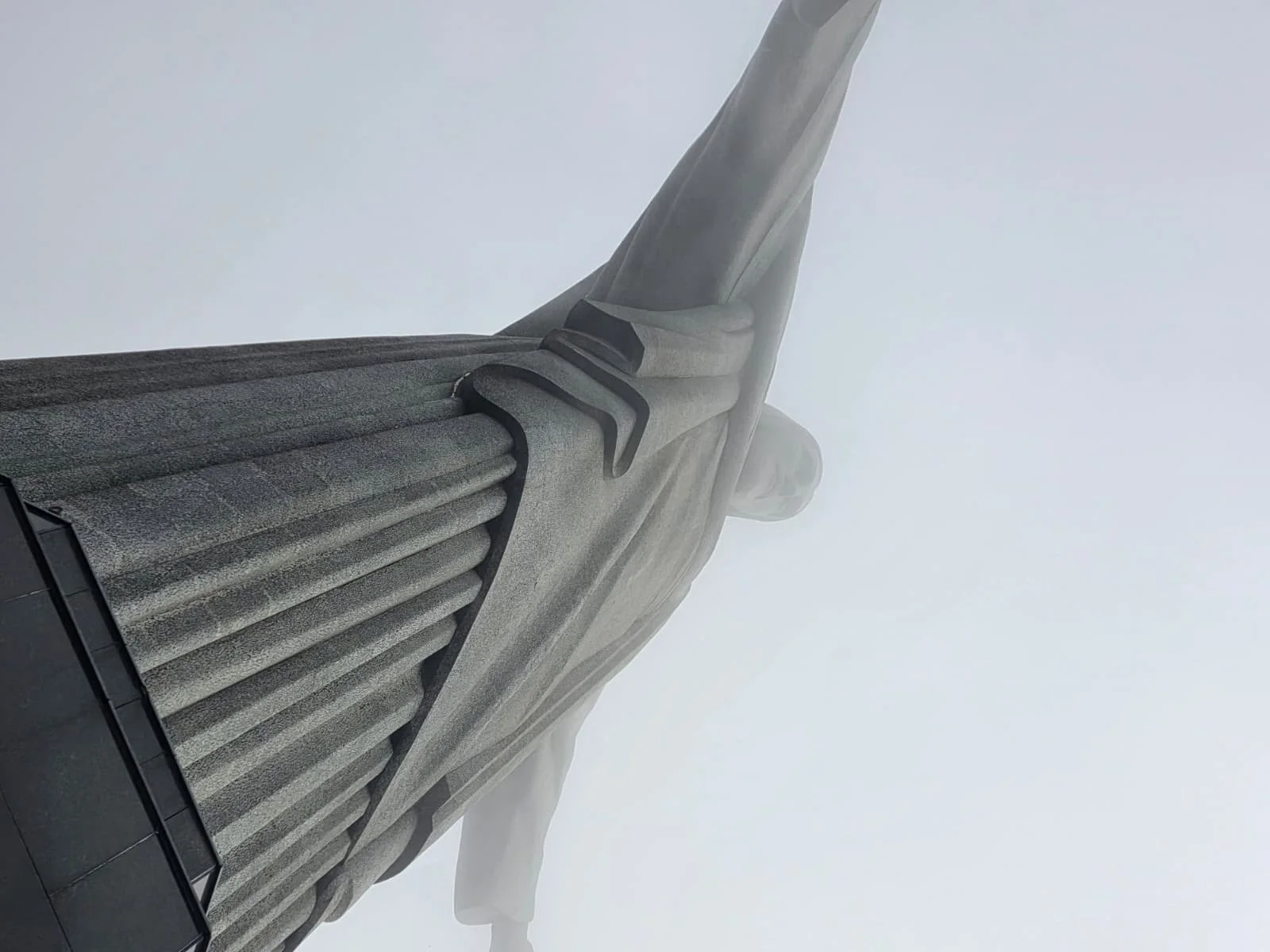
What struck me was not that we were distracted. It was that he did not compete. He did not lean down, did not so much as move an eye toward the rail to win us back. He stood exactly as he had stood since 1931, arms out, offering the thing he offers, while a creature the size of a cat took the whole mountain off him in a second and gave it back a few minutes later when the food ran out.
The crowd looked up again eventually. They always do. The capuchins went back down the rock into the trees that an emperor planted, and the heads tilted back, and the phones went up, and it was as if it had never happened.
I did say the prayer. I want to record that it took more strength than I expected to leave the rail, more than a grown man should need to walk away from a monkey.
I went round the base of the statue to the small chapel set into the pedestal, where there are no monkeys and no view and you cannot see the Christ at all because you are standing inside his feet, and I prayed the prayer I had come to pray.
It was the same prayer. It just had to be fought for.
